
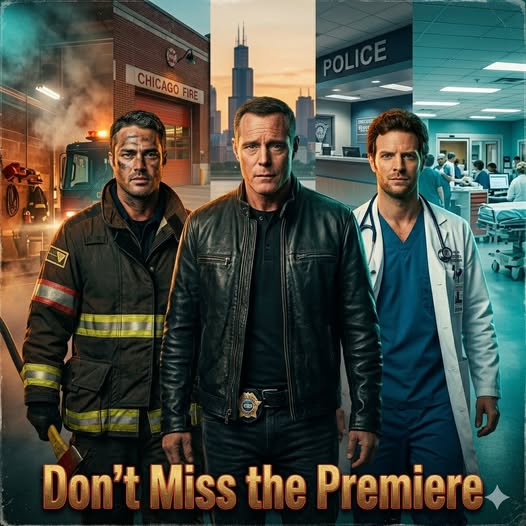
Chicago Fire, Med, and PD won’t be airing together on NBC for quite some time
For years, Wednesday nights on NBCUniversal’s Chicago Fire, Chicago Med, and Chicago P.D. have been a beloved tradition for television fans. The three interconnected dramas — often referred to collectively as the “One Chicago” franchise — created one of the strongest primetime blocks on network television. Viewers became accustomed to tuning in weekly for intense emergencies, emotional hospital cases, and gripping police investigations all in one night.
However, fans are now facing an unusual scheduling disruption. NBC will not be airing all three “One Chicago” shows together for quite some time, leaving many viewers disappointed and wondering what caused the sudden break in tradition.

In this article, we’ll explore why the scheduling change is happening, how it affects the future of the franchise, what NBC’s strategy may be, and what fans can expect moving forward.
Why NBC’s One Chicago Schedule Is Changing
The biggest reason behind the scheduling shakeup is NBC’s evolving programming strategy. Like many major television networks, NBC has been adjusting its lineup to balance live sports, special events, streaming competition, and production schedules.
Traditionally, the One Chicago lineup dominated Wednesday nights:
- 8 PM: Chicago Med
- 9 PM: Chicago Fire
- 10 PM: Chicago P.D.
This structure worked incredibly well because each series flowed naturally into the next. Characters crossed over regularly, storylines interconnected, and audiences remained engaged for three consecutive hours.
But in recent years, television scheduling has become far more complicated.
Streaming platforms have dramatically changed viewer habits. More audiences now watch episodes on-demand instead of live television. Because of this, networks like NBC are experimenting with different programming strategies to maximize ratings and advertising revenue.
As a result, NBC has decided to separate the shows temporarily rather than airing them together consistently.
Sports Programming Is Taking Over Key NBC Slots
One major factor affecting the One Chicago franchise is NBC’s growing commitment to live sports coverage.
Sports programming delivers massive real-time audiences, something scripted television increasingly struggles to achieve. NBC has invested heavily in broadcasting rights for:
- NFL games
- NBA coverage
- Premier League soccer
- Olympic events
- Special sports broadcasts
These events frequently disrupt normal primetime schedules.
Because live sports often attract millions of viewers, NBC prioritizes them over scripted dramas during certain weeks. Unfortunately for One Chicago fans, this means the franchise occasionally gets pushed aside or staggered across different dates.
The scheduling interruptions may continue for several months depending on NBC’s sports calendar.
Production Delays Also Play a Role
Another reason NBC won’t air Chicago Fire, Med, and PD together is ongoing production management.
Television production has faced numerous challenges over the past few years, including:
- Industry strikes
- Budget adjustments
- Shortened episode orders
- Scheduling conflicts
- Actor availability
Even though the shows remain popular, producing three large-scale dramas simultaneously is expensive and logistically difficult.
Each series requires massive crews, stunt coordination, location filming, and post-production work. When delays happen for one show, the entire Wednesday-night lineup can become difficult to coordinate.
NBC appears to be spacing out episodes strategically to avoid long midseason gaps later in the year.
Fans Are Frustrated by the Interrupted Viewing Experience
Many longtime viewers are expressing frustration online about the schedule changes.
One of the biggest strengths of the One Chicago franchise has always been consistency. Fans enjoyed sitting down every Wednesday night knowing they would get three consecutive hours inside the shared universe created by Dick Wolf.
Now, viewers may find:
- One show airing while another is on hiatus
- Repeat episodes replacing new installments
- Different timeslots across certain weeks
- Unexpected breaks between episodes
For casual audiences, this can create confusion. For dedicated fans, it disrupts the emotional rhythm of the franchise.
Social media discussions reveal many fans miss the seamless crossover atmosphere that once made One Chicago feel like a true television event every week.
NBC Is Prioritizing Long-Term Ratings Stability
Although fans may dislike the temporary separation, NBC’s strategy likely focuses on maintaining stronger ratings throughout the entire season.
Instead of burning through episodes quickly, networks often spread content carefully to avoid lengthy hiatuses later.
This approach helps:
- Retain audiences longer
- Reduce viewer fatigue
- Protect ratings consistency
- Align premieres with major events
- Increase streaming engagement
By spacing out episodes, NBC can keep the franchise active over a longer period rather than airing all episodes consecutively and running out of content early.
It’s a strategy many broadcast networks now use in the streaming era.
The One Chicago Franchise Remains Extremely Important to NBC
Despite the schedule disruption, fans should not panic about the future of the franchise itself.
The One Chicago universe remains one of NBC’s strongest scripted properties. Together, Chicago Fire, Chicago Med, and Chicago P.D. continue attracting loyal audiences both on traditional television and streaming platforms.
The franchise has also built a massive international fanbase.
Each series serves a different audience segment:
- Chicago Fire focuses on firefighters and rescue operations
- Chicago Med centers on medical drama and emotional cases
- Chicago P.D. explores darker crime investigations and police work
Because the shows complement each other so well, NBC still views the franchise as a cornerstone of its entertainment lineup.
The temporary scheduling changes are more about strategy than cancellation concerns.
Crossovers May Become Less Frequent
One unfortunate side effect of separate scheduling is the potential reduction in crossover episodes.
Historically, crossover events were some of the most exciting moments in the franchise. Characters from all three series frequently interacted during large emergencies or citywide crises.
These events boosted ratings significantly because fans had to watch every show to follow the complete story.
However, staggered airing schedules make large crossover coordination more difficult.
That doesn’t necessarily mean crossovers are ending forever — but fans may see fewer of them moving forward unless NBC restores the unified Wednesday structure consistently.
Streaming Has Changed How Networks Think
Modern television is no longer built entirely around live weekly viewing.
Streaming services have transformed audience behavior dramatically. Many viewers now binge-watch episodes days or weeks after airing rather than watching in real time.
NBC’s parent company heavily promotes streaming through Peacock, where One Chicago episodes perform strongly after broadcast premieres.
Because streaming numbers matter more than ever, NBC no longer depends entirely on maintaining traditional primetime habits.
This allows the network to experiment more aggressively with scheduling flexibility.
In other words, even if the shows are no longer airing together every week, NBC still benefits financially through delayed streaming audiences.
What This Means for Chicago Fire
Chicago Fire remains the emotional backbone of the franchise for many fans.
The series continues exploring:
- High-risk rescues
- Firehouse family dynamics
- Leadership conflicts
- Emotional personal relationships
Even with scheduling interruptions, Chicago Fire remains one of NBC’s most recognizable dramas.
Fans are especially invested in the evolving relationships and long-running character arcs that have developed over multiple seasons.
NBC will likely continue giving the series strong promotional support regardless of temporary scheduling adjustments.
What This Means for Chicago Med
Chicago Med faces unique challenges because medical dramas compete heavily in today’s television landscape.
Still, the show continues maintaining a loyal audience thanks to its emotional storytelling and fast-paced hospital emergencies.
The inconsistent scheduling could impact weekly momentum, especially for serialized character storylines. Medical dramas often rely heavily on emotional continuity, and long gaps between episodes can reduce viewer engagement.
However, streaming availability helps offset this issue significantly.
Fans who miss episodes during schedule disruptions can easily catch up later online.
What This Means for Chicago P.D.
Chicago P.D. arguably benefits the most from delayed viewing habits.
Crime dramas traditionally perform very well on streaming platforms because audiences enjoy binge-watching investigative storylines.
The darker tone and intense pacing of Chicago P.D. continue attracting strong fan engagement online.
Even if the series airs separately from Fire and Med temporarily, its audience remains highly dedicated.
NBC likely understands this and feels comfortable experimenting with the schedule because Chicago P.D. has proven resilient across multiple viewing formats.
Could NBC Eventually Restore the Full Wednesday Block?
There is still a strong possibility that NBC will eventually return to the classic One Chicago lineup permanently.
The three-show Wednesday format remains highly recognizable and valuable from a branding perspective.
Fans associate Wednesday nights with:
- Emotional rescues
- Hospital emergencies
- Police investigations
- Major crossover events
- Shared universe storytelling
NBC understands the cultural power of that tradition.
If ratings remain strong and scheduling conflicts ease, the network could easily restore the complete lineup in future seasons.
For now, though, viewers should prepare for ongoing flexibility rather than expecting a perfectly stable weekly schedule.
The Future of One Chicago Still Looks Bright
Even though Chicago Fire, Med, and PD won’t be airing together on NBC for quite some time, the long-term outlook for the franchise remains positive.
The television industry is evolving rapidly, and networks are adapting to changing audience behaviors. Scheduling shifts are becoming increasingly common across broadcast television.
While fans may miss the classic Wednesday-night routine, the popularity of the One Chicago universe remains undeniable.
NBC still views the franchise as one of its most dependable entertainment brands, and there is little indication that the network plans to move away from it anytime soon.
For dedicated fans, patience may be necessary — but the fires, emergencies, and investigations of Chicago are far from over.